We live in a modern digital world where software applications and systems are business critical assets.
Knowing what software applications and systems we have is an important aspect of running the business and I appreciate that this is a very obvious statement.
In addition, knowing how well the software applications and systems are running and understanding the value that they bring to the business is equally as important.
Hence, conducting applications system reviews is a process that should be periodically undertaken and doing so points to well run and managed businesses and organisations.
Performing an applications system review typically involves the assessment of functionality and performance of an organisation’s software applications and systems and will typically involve the following stages:
- Scope Definition
- Information Gathering
- System Requirements Identification
- System Functionality Evaluation
- System Performance Assessment
- Documentation of Findings and Recommendations
- Presentation of Findings and Recommendations

Scope Definition involves understanding the specific applications that will be reviewed, the business processes supported by those applications, and then agreeing on the objectives of the review.
Information Gathering is where data is collected on the current system architecture, software applications, and business processes. This will typically involve the review of all available system documentation, user manuals, software licenses, and any other associated materials.
With System Requirements Identification, the functional and technical requirements of each application will be reviewed. This will typically involve analysing current business processes and determining how the software applications support them.
The next stage is System Functionality Evaluation where a detailed analysis of the applications will be conducted to determine their respective strengths and weaknesses. This can involve activities such as testing the applications, reviewing user feedback, and examining system logs.
Conducting a System Performance Assessment will allow the evaluation of performance for each application in terms of speed, reliability, and scalability. This may involve analysing system metrics, conducting load tests, and reviewing user complaints.
Documentation of Findings and Recommendations is where the results of the review highlighting areas of strength and weakness will be recorded in the form of a report. The document will include a set of recommendations for improving the system, such as upgrading software, modifying business processes, or providing additional training to users.
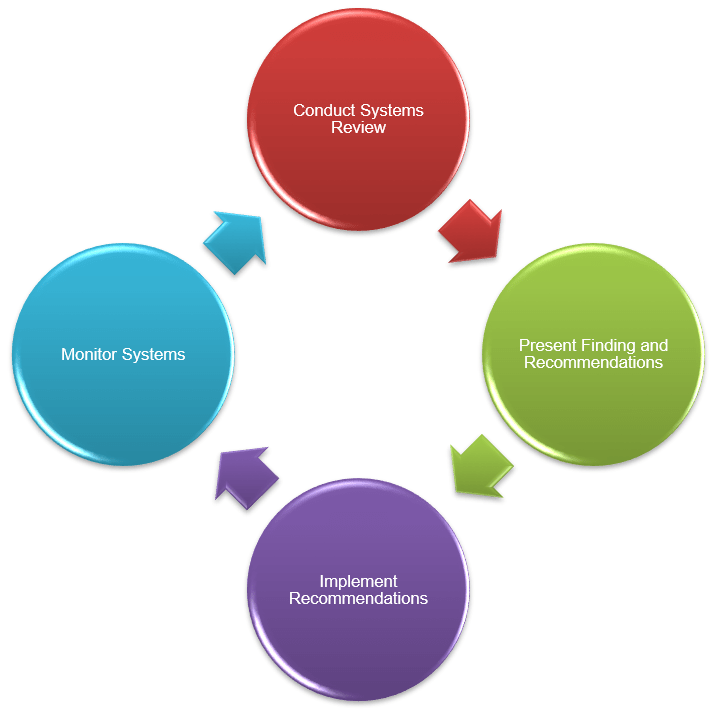
And finally, there will be a Presentation of Findings and Recommendations where the results of the review will be shared with key stakeholders, such as senior management, IT staff, and business users.
Note that if there are no follow up of actions based on the recommendations contained within the report, then continuous improvement of a business or organisations systems and processes cannot be achieved.
There is actually an additional ongoing activity which is Monitoring Improvements that have been implemented and running over time to ensure the desired objectives of the review have been achieved. Hence, conducting periodic reviews to ensure the applications and systems remain effective and efficient is an important ongoing activity that should not be overlooked and is at the core of any continuous improvement business function.
If your business or organisation is in need of an applications and systems review, then feel free to contact me and I would be more than happy to discuss your needs in further detail.
 Atia Solutions